Up Slowly or Not at All: The Case for Wasting Days at Altitude
I have watched a grown man in expensive boots vomit into a Quechua family's potato field at 4,300 meters because he flew into Cusco, slept four hours, and got in a van to a trailhead at dawn. He had a spreadsheet. He had a summit to hit before his flight home on Friday. What he did not have was a single day built into the plan for the simple, unglamorous business of letting his body catch up with the mountain.
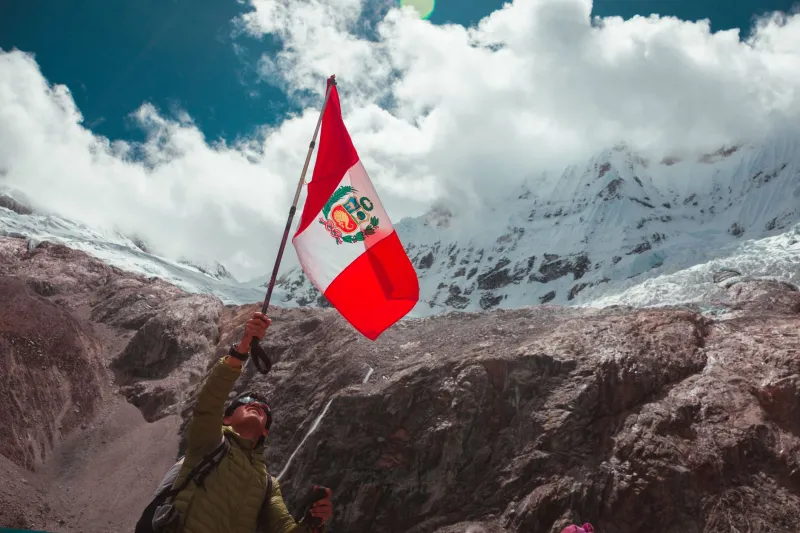
That's the whole argument in one anecdote. We have sold the Andes as a series of objectives — the pass, the peak, the viewpoint at 5,000 meters with the flag — and in doing so we've made the experience worse, the risk higher, and the economics thinner for the people who actually live up there.
The summit tax
Bagging has a cost, and it's paid three ways. First, your body: acute mountain sickness is not a character flaw, it's physiology, and no amount of gym time in Denver changes it. Second, the place: the same handful of trails get hammered while the valleys one ridge over see almost nobody. Third, the money: a fast trip concentrates spending in Cusco or Huaraz agencies, in gear shops, in the same four hotels. A slow trip spreads it into village homestays, local restaurants, muleteers, and small guides who live at altitude year-round.
In 2026 the crowds at the famous trailheads are not a rumor. If your plan is to sprint through a bottleneck to beat a crowd, you are the crowd.
What a slow day actually buys you
Here's the thing nobody puts on a tour page: the acclimatization days are the good days. You walk a little, sit a lot, eat a long lunch, watch weather move across a valley, and talk to people who aren't in a hurry. You see the Andes as a place rather than a course.
Cusco: three nights minimum
Land, and stay put. Cusco sits around 3,400 meters and the first two days should be at or below that. Walk to Sacsayhuamán, wander San Blas, drink water like it's your job, skip the pisco sour on night one. Day three, take a slow day in the Sacred Valley — Chinchero, Maras, Moray — all lower and easier. Only then should you think about a trek, and when you do, put the highest point at the end of the itinerary, not the start.
The payoff is real: with two extra days you can add a night in a village like Huilloc or a market morning in Pisac that actually has produce in it, instead of arriving at 11 a.m. with the tour buses.
Huaraz: earn your 4,600
The Cordillera Blanca rewards patience more than any range I know. Huaraz is 3,090 meters, which feels fine and fools a lot of people. Day one: Wilcacocha, a gentle 3,700-meter walk with a taxi at each end. Day two: hike partway up toward Churup, stopping at the 3,850-meter trailhead and turning around when your head says so. By day three, Laguna 69 at 4,600 is a reasonable objective instead of a gamble. Then, and only then, do the Santa Cruz trek or a bigger climb.
What you gain is not just safety. Those first two days put you in the villages of the Callejón de Huaylas on market day, in a local comedor eating trout for six dollars, and on trails where the only other person is a woman herding sheep.
The Bolivian altiplano: sit at 3,800
La Paz is the great test case, because the airport is at 4,060 meters and the city spills between 3,200 and 4,100. Most people arrive, panic about the altitude, and immediately bus to somewhere lower. Better: give La Paz three nights, take the easy Valle de las Ánimas walk, ride the teleférico, and treat the first day as a write-off. Then Copacabana on Lake Titicaca at 3,841 and a night on the Isla del Sol around 4,000. After a week of that, Sajama at 4,200 feels like a normal place to sleep rather than a dare.
The counterargument, honestly
Not everyone has three weeks. American vacation time is what it is, flights are expensive, and telling someone with ten days of PTO to spend four of them sitting in cafés is a hard sell. Fair.
So here's the compromise: pick one altitude band and stay in it. Instead of stitching Cusco, Huaraz, and the altiplano into one trip, choose one region and go deeper. Ten days in the Cordillera Blanca will give you more than a three-region sprint ever could, and you'll come home actually rested, which is not a sentence most Andes travelers get to say.
The other objection is cost. Slow travel is cheaper. Fewer permits, fewer internal flights, fewer nights in $200 hotels, more nights in $20 homestays where the money stays in the village. The expensive part of the Andes is the rushing.
How to build a slow trip
A few working rules, learned the hard way. Two nights at every new sleeping altitude above 3,400 meters. Nothing above 4,000 in the first 72 hours. Big objectives last, never first. One rest day for every three active ones. And a real buffer day at the end, because weather in the high Andes cancels things and a missed flight is a worse memory than a missed summit.
Carry the usual: layers, water treatment, sunscreen for snow glare, and a doctor's opinion on acetazolamide before you fly rather than after you feel bad. Know the symptoms of serious altitude illness and know that the treatment is to go down, not to push through.
What you give up by going fast
Almost nothing you'll remember. The summit photos all look the same. What sticks is the afternoon you spent watching hail cross a valley from a doorway in Tapay, or the market in Huaraz where a woman sold you twelve types of potato and laughed at your pronunciation.
The Andes are not going anywhere. Plan as if that's true — book fewer miles, stay longer, and let the altitude set the pace. It's the better trip, the fairer trade, and honestly the more interesting one.