The Bridge Has a Birthday: How to Cross an Andean Rope Bridge Without Treating It Like a Ropes Course
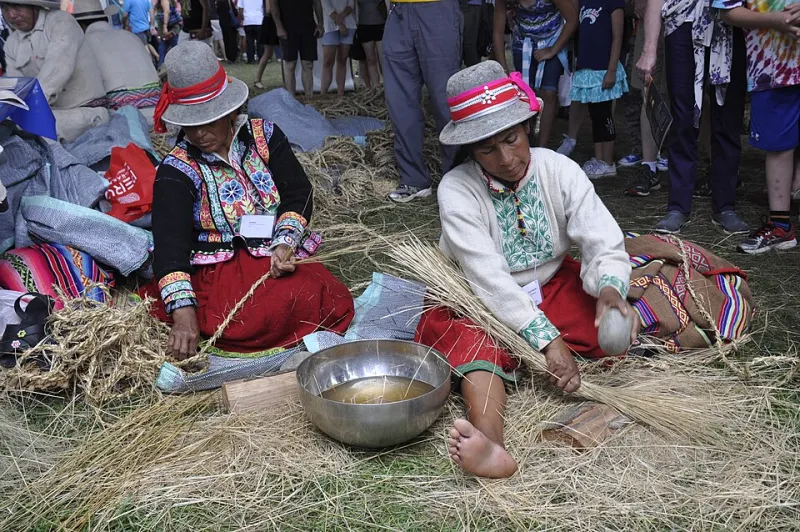
Photo: Jarek Tuszyński, CC BY 4.0, via Wikimedia Commons
At Q'eswachaka, the bridge does not pretend to be permanent. It sways under a single person, creaks like a basket, and looks—to an American eye—less like infrastructure than a very ambitious craft project. Then you notice the stone anchors, the worn path on both banks, and the fact that people are using it to move potatoes, not to chase an adrenaline rush. That is the first lesson: this is a working bridge, rebuilt on a schedule, and you are a guest in its maintenance cycle.
A Bridge With a Built-In Expiration Date
Q'eswachaka crosses the Apurímac River in the Cusco region of Peru. Its deck and handrails are made from qoya, a tough highland grass. Workers twist the grass into cords, then into thicker ropes, then braid those into the main cables. The result is strong but not immortal. Rain, sun, footsteps, and livestock take a toll. So the communities of Huinchiri, Chaupibanda, Choccayhua, and Ccollana Quehue rebuild it each June, weaving a new span beside the old one before cutting the previous bridge loose. UNESCO added the practice to its Intangible Cultural Heritage list in 2013, which sounds official until you watch a crew of neighbors yanking grass ropes tight by hand and realize the real authority is local knowledge.
The Rebuild Is Not a Show
Timing varies, but the work generally happens over several days in June. Men braid the heavy cables; women and elders prepare and twist grass; kids run errands; someone keeps the food and drink coming. There are rituals and a celebration, and there are also long, unglamorous hours of pulling, knotting, and checking. Visitors are welcome at the annual event, but welcome is not the same as entitled. Ask before taking photos, stay out of the work lanes, and do not grab a rope to help unless someone hands you one. If you want to support the effort, hire a local guide and pay the community fee rather than showing up with a drone and a camera rig.
Not Every Rope Bridge Is a Visitor Site
Q'eswachaka is the famous one, reachable as a long day trip from Cusco and often paired with nearby archaeological sites. It is also the most prepared for outsiders. Other grass-rope crossings in the highlands are farm infrastructure—short, low, and used by people who know exactly how many animals can be on them at once. If you find one on a village path, treat it like someone's driveway. Ask permission, follow local advice, and be ready to hear a polite no. A bridge that appears on a map or in a guidebook is not automatically public entertainment.
How to Cross Without Being a Problem
If you do get the nod, keep it simple. Go one at a time unless locals signal otherwise. Keep your hands free for the handrails. Leave space between you and the person ahead. Do not jump, bounce, swing, or stop in the middle to stage a photo. Do not bring a dog. Do not cross during maintenance or when the bridge is crowded with livestock. And do not ignore weather: wind and rain make a swaying bridge more interesting than you need. If you are nervous, say so and turn around. The bridge has survived worse than your pride.
The Bank Is Part of the Experience
During the rebuild, the best view is often from the bank. You can watch the old bridge drop, the new one tighten, and the community close the loop on another year. That is not a lesser experience. It is the actual point: infrastructure here is a social agreement, renewed by hand. In the US, we tend to think of bridges as concrete facts. In the Andes, a bridge can be a promise that gets rebraided every June.
Practical Notes for 2026
Go with a licensed local operator or community guide. Confirm current access and fees before you leave Cusco. Bring sun protection, water, and small bills. Leave the drone home unless you have explicit permission. And build in slack—this is a highland day trip, not a museum visit. The bridge may be open, closed, or busy with a ceremony. The point is not to check it off. The point is to read the situation and act like a guest.