The Five-Dollar Handshake: Reading Community Trail Fees in the Andes
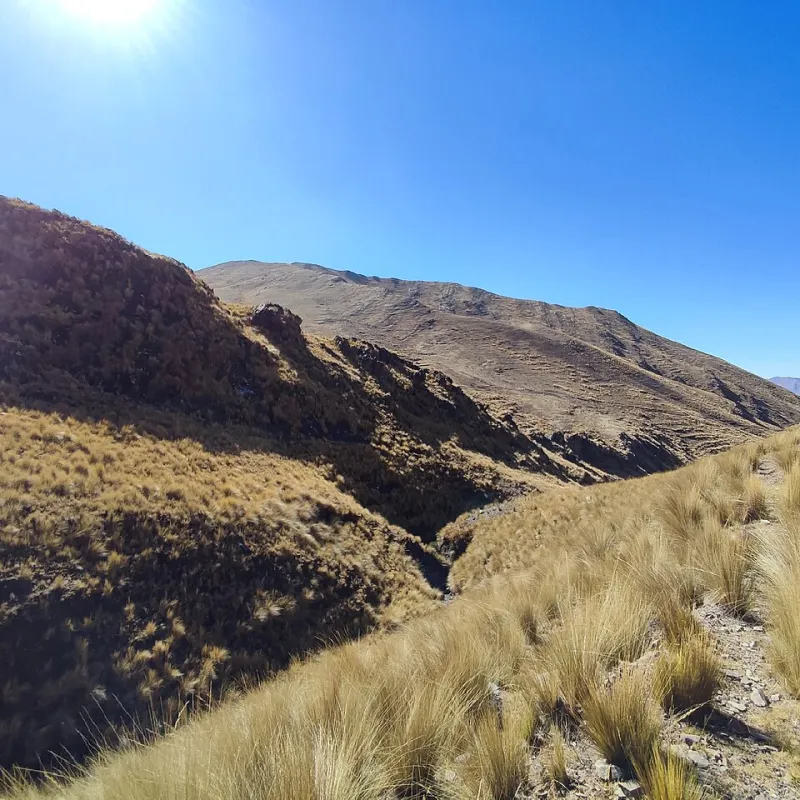
Photo: Nina Reicer, CC BY-SA 4.0, via Wikimedia Commons
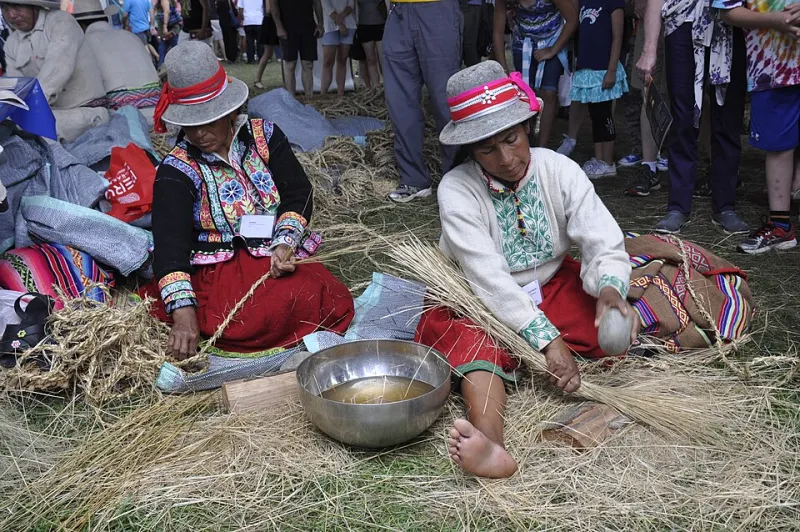
On a dusty switchback outside a highland village, a woman in a bowler hat holds a notebook and a plastic bag of coins. She names a price—maybe the equivalent of three dollars, maybe eight—and gestures up the trail. Your first instinct, trained by years of national park entrance booths, is to look for a sign, a receipt, a laminated rate sheet. What you get instead is a nod and a line in a school notebook.
That moment is where a lot of travelers get stuck. We want the fee to be official or illegitimate, transparent or sketchy. In practice, Andean community trail fees live in a middle ground: real obligations, informal administration, and genuine local need. The useful question is not whether the fee feels official. It is what the payment is connected to.
First, Separate the Fee From the Feeling
In the US, we are used to trailhead donation boxes, forest service passes, and park entrance stations with printed rates. When those markers are missing, suspicion rushes in. But a handwritten sign and a cash-only collection are not proof of a scam. They are often just what a small village can produce without a credit card terminal or a website.
At the same time, not every person who asks for money at a trailhead speaks for a community. Some fees are long-standing village agreements. Others are improvised by an individual. Your job is not to play detective at 12,000 feet. Your job is to read context, ask a question or two, and make a decision you can live with.
A Fee's Journey, From Hand to Trail
A typical community fee follows a short path. You hand cash to a collector—often a rotating role, sometimes the person who owns the land nearest the trail. The collector writes your name, date, and amount in a notebook, or tears a slip from a cheap receipt book. Later, that cash goes to a treasurer or village assembly. It becomes planks for a bridge, cement for a drainage channel, pay for a crew that clears a blowdown, or compensation for a farmer whose pasture the trail crosses.
It is rarely a clean digital trail. The notebook may be the only ledger. The treasurer may keep cash at home. The trail crew may be paid partly in cash and partly in food. This is not automatically a red flag; it is how small cash economies work. What matters is whether the fee connects to a known community process and a visible use.
What Community Fees Usually Support
Legitimate fees tend to fund unglamorous things. Trail clearing after the rainy season. Bridge repairs. Tools, gloves, and fuel for a crew. Fence and gate maintenance. A small emergency fund for mule drivers or porters. Sometimes a fee supports the village itself—school supplies, a meeting hall repair, or a guard for a community forest.
The amounts are usually modest by US standards. A few dollars per hiker, or a small charge per animal, can add up over a season. But it rarely funds a salary. More often it buys the difference between a trail that gets reopened and one that quietly disappears.
Four Questions You Can Ask Without Being an Auditor
You do not need to interrogate anyone. Ask after a greeting, not while blocking the trail. One or two questions are enough.
- Who is collecting the fee, and for which community or trail? This clarifies whether you are dealing with a village fund or an individual.
- What does the fee support this season? Listen for specifics: a bridge, a crew, a gate, a pasture. Vague answers are not proof of fraud, but specific answers are a good sign.
- Is there a community agreement or a rate for hikers and animals? Consistency matters more than paperwork.
- May I record my payment, or is there a log I can sign? A notebook is often the receipt.
If the answers are clear, pay and move on. If they are murky, ask one follow-up. If the situation feels tense, do not turn a trailhead into a debate. Pay a small amount if that is the local expectation, note it, and ask later at the village office or with your host.
Three C's for Telling a Community Fund From an Improvised Toll
I use a simple framework: community, consistency, clarity.
Community means more than one person knows about the fee. A neighbor confirms it. A village leader has heard of it. The collector is not inventing a price on the spot for the only foreigner in sight.
Consistency means the rate does not swing wildly based on your backpack or your accent. It may vary for locals, hikers, and animals, but the logic is stable.
Clarity means the purpose is identifiable, even if the bookkeeping is not. A new bridge, a trail crew, a community fund—those are clear enough. A demand for cash with no explanation and no local recognition is not.
When all three are present, I pay without fuss. When one is missing, I ask. When two or three are missing, I treat it as an improvised toll and keep my decision small and calm.
Paying Well Is a Skill
Carry small bills. Exact change is a courtesy. Thank the collector, and do not photograph the notebook without permission. If you want a record, write the amount and location in your own notes. Do not demand a formal receipt; in many villages, the relationship is the receipt.
Back home, we like transparency dashboards. On an Andean trail, transparency may look like a treasurer's notebook, a new plank on a bridge, or a crew eating lunch under a tarp. The fee is not the whole relationship, but it is one handshake in it. Pay with attention, ask with respect, and let the trail show you what your coins helped hold together.