What the Map Is Whispering: Quechua Place Names as Trail Beta
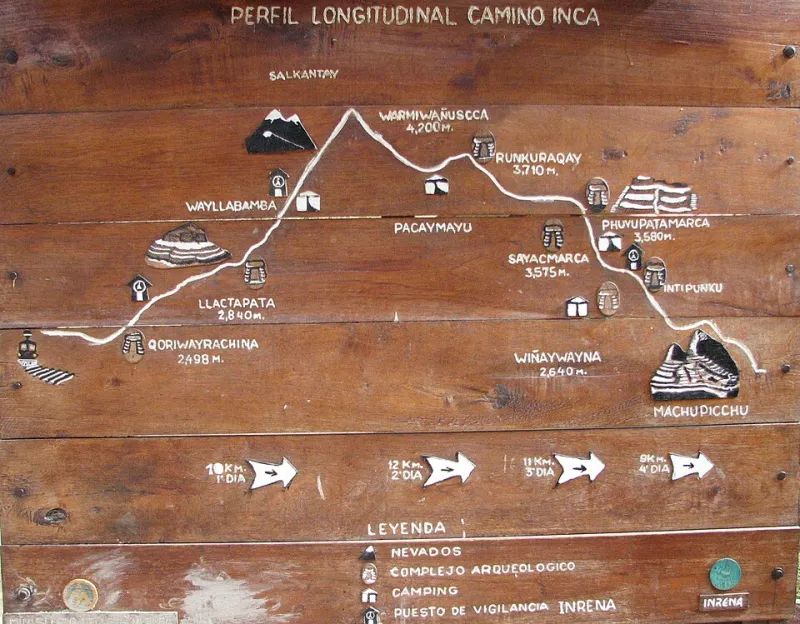
Photo: The original uploader was Steve Pastor at English Wikipedia., CC BY 3.0, via Wikimedia Commons
On a slow bus north of Cusco, I once spread a map across my knees and tried to make sense of the names. They looked like a Scrabble rack had fallen onto the paper: Qochapata, Pumapunku, Wayq'u, Q'asa. A woman across the aisle asked where I was headed. I pointed to a dot called Qochapata. She nodded and said, simply, 'lake edge.' That was my first real lesson in Andean navigation: a place name is often a tiny route note left by people who walked the ground first.
Start With a Hypothesis, Not a Promise
Quechua place names can tell you where water hangs out, where the ground turns to stone, where a pass is likely to bite, and where someone once built a storehouse or a bridge. They are not a substitute for a topo map, a local ranger, or your own eyes. Think of them as margin notes in a used guidebook—useful, human, and occasionally out of date.
Many Andean names are Quechua, but not all of them. Aymara, Spanish, and local languages mix in, and spellings shift depending on who wrote the sign. Apostrophes that mark glottal stops in Quechua often disappear on maps. So the method here is simple: read the name as a clue, then check it against the terrain.
The Roots That Do the Heavy Lifting
A handful of roots show up again and again. Water names are the most common and the most useful. Yaku means water. Mayu means river. Qocha, often written cocha, means lake. Puquio points to a spring. Phaqcha, or paccha on many signs, means waterfall. Wayq'u, sometimes huayco, means ravine. If a trail name includes one of these and the ground looks bone dry, that is not a contradiction. It is a question: is the creek seasonal, diverted, or simply named for a spring that surfaces farther up?
Elevation and shape names come next. Q'asa means pass. Puna means high grassland. Pampa means flat ground, and it often appears as -bamba in Spanish renderings. Pata means a ledge or terrace. Punku means gate or narrow opening. Orqo means mountain. These roots help you picture the puzzle ahead: a q'asa is probably not a stroll, a pampa is probably not a knife-edge ridge, and a punku may be a constriction you should not oversell to a nervous hiking partner.
Ground names matter too. Rumi means stone. Allpa means earth or soil. A name built from those roots can hint at rocky trails, mud, or cultivated ground. Human-history names are the quietest and sometimes the most interesting: marka for village or town, wasi or huasi for house, tambo for a rest stop or lodging, chaka for bridge, qolqa for a storehouse, and ñan for path or road. When a route passes a place called Chaka or Qolqa, you are walking through a landscape that has been organized for travel and storage for a long time.
Four Quick Checks Before You Commit
First, scan for water. Names with yaku, mayu, qocha, puquio, or phaqcha can flag crossings, camps, or a reliable lunch spot. Second, scan for vertical trouble. Q'asa and puna are your early warnings that the day may be higher and slower than the mileage suggests. Third, scan for settlement and infrastructure. Tambo, chaka, and marka imply old route logic, even if the modern village has moved. Fourth, scan for ground conditions. Rumi and allpa are not guarantees, but they are better than nothing when you are trying to guess whether to pack sandals or boots.
Where the Method Breaks
This is where a lot of name-based confidence goes wrong. A place called Yaku can have a dry creek because the water was diverted generations ago. Two villages in the same valley can share a name, or a tourist map can rename a spot to make it sound more mystical than it is. Colonial spelling, local pronunciation, and bureaucratic signs all leave different fingerprints. A name may describe a historical condition rather than a current one.
So do not navigate by etymology alone. Use names to form questions, then answer them with your map, your eyes, and the people who actually live there. If the name says lake and you see a pasture, believe the pasture. If the name says pass and the trail keeps contouring, believe the trail.
A Pocket Lexicon for the Trail
| Term | What it hints at | Reality check |
|---|---|---|
| yaku | water | could be seasonal or diverted |
| mayu | river | check crossing conditions |
| qocha / cocha | lake | may be a wetland or dry basin |
| puquio | spring | ask before drinking |
| phaqcha / paccha | waterfall | may be a dry cliff in the dry season |
| wayq'u / huayco | ravine | flash-flood caution |
| q'asa | pass | expect wind, exposure, slow miles |
| puna | high grassland | cold nights, thin air |
| pampa / -bamba | flat ground | could be marshy |
| pata | ledge or terrace | often a village site |
| rumi | stone | rocky trail or old walls |
| tambo | rest stop | historical, not a guarantee of shelter |
| chaka | bridge | check the bridge, not just the name |
| qolqa | storehouse | often archaeological |
Asking Without Interrogating
Asking about names is one of the best ways to meet a place, but it needs a light hand. Start with a greeting. Ask '¿Cómo se llama este lugar?' before you offer your own theory. If the conversation is going well, ask '¿Qué significa?'—what does it mean? Do not correct spelling or pronunciation. Do not announce that you have decoded the name and then wait for applause.
In Quechua-speaking communities, Spanish may be a second language, and a local guide can make the exchange easier. Some names are tied to family histories, land boundaries, or stories that are not meant to be repeated in a blog post. If someone shares a name with you, use it. If they do not, let it go. Ask before recording. A little humility goes a long way, especially when you are the guest.
The Payoff Is Attention
Once you start reading names, the trail stops feeling anonymous. You notice the spring above the switchbacks. You wonder about the old wall near a place called Qolqa. You slow down at a q'asa because the name told you it was coming. The map is not whispering secrets. It is muttering practical things—water here, stone there, a pass ahead—in a language that has been paying attention for a very long time.