Stones Are Not Stepping Stones: An Argument for Better Manners at Andean Ruins

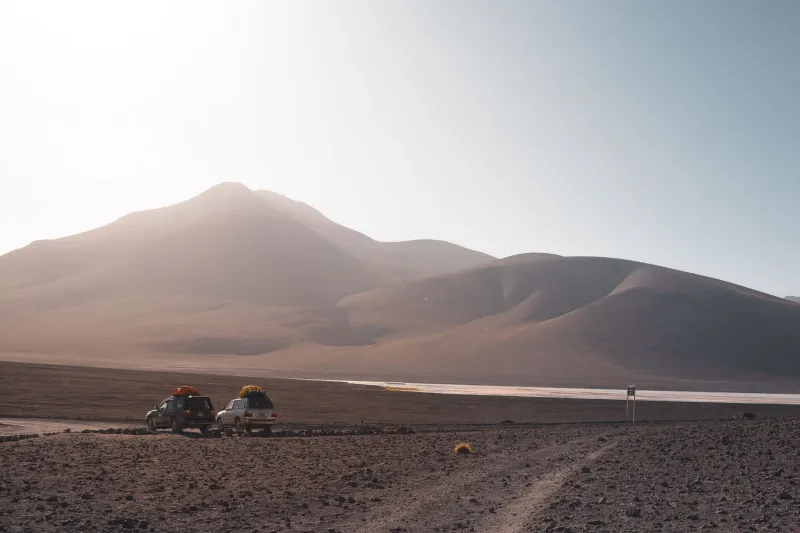
Photo by Photo by Mario Gogh on Unsplash on Unsplash
I watched a man in expensive trail runners climb a six-hundred-year-old agricultural terrace last year so he could get a better angle on his own face. He was not being malicious. He was being thoughtless, which is more common and, over enough seasons, just as damaging.
This is not a piece about bad people. It is a piece about how easily a place becomes scenery.
The wall is older than the country
There is a mental adjustment that has to happen before you walk into an Andean archaeological site, and it is this: the thing you are looking at was built by people who had a working economy, a calendar, and a labor system, and then it was abandoned, and then it was used by other people, and then it sat in weather for centuries. It outlasted every empire that came after it. The fact that it is still standing is not because it is sturdy. It is because it has been lucky.
Lucky is a thin margin. Mortar erodes. Lichen is a living thing that stabilizes surfaces. A single boot on a loose block can start a chain of small failures that nobody sees and nobody fixes.
Signs exist because something happened
Site signage in the Andes is often minimal, sometimes faded, and rarely in fluent English. Do not read that as an absence of rules. Read it as a place where you are expected to use judgment.
Where a path is marked, stay on it. That is not bureaucratic fussiness; the paths are usually routed over stable ground and the areas beside them are often the fragile parts. Where a rope or a low wall blocks access, it is not a suggestion, and the fact that other people have ignored it does not make it an entrance.
The temptation of a good wall
Climbing is the big one. Terraces, walls, and staircases invite a scramble up, especially when the light is good and the view from the top is obviously better. Resist. Rock that has been exposed for centuries is often softer than it looks, and the top course of a dry-stone wall is held by nothing but gravity and habit.
Moving stones is the second one. Do not build a cairn at a ruin. Do not rearrange anything. Do not take a small souvenir, even a flake. Do not bury anything and do not leave anything, including the orange peel you are certain will decompose.
And do not do yoga on the ceremonial platform. It has happened.
Hire the guide who lives down the hill
A local guide is not a tax on your independence. At most Andean sites, a guide from the surrounding community knows which paths are open, which areas the community is actively restoring, and what the site actually meant, which is generally not what the sign says. They also tend to tell you, in the first five minutes, exactly where not to walk, because they do not want to spend their afternoon explaining an accident to a park office.
Ask at the entrance. Expect to pay a fair rate. Ask questions that are not about the aliens, and you will usually get a much better hour than the one you would have had alone.
Photograph the place, not a prop
A ruin is a subject. It is not a backdrop, and the people who live near it are not extras. If you want a person in your frame, ask. If someone is working in a field beside the site, that field is their workplace, and a lens pointed at them for ten minutes is a strange thing to do to a stranger.
Use the marked viewpoints. Do not stand on architecture to get a higher angle. Do not fly a drone, both for the noise and because in many communities it is genuinely unwelcome. And please do not treat a sacred platform as a spot for a triumphant pose with your arms out.
What respect actually costs
Almost nothing. It costs a few minutes of reading, a slightly longer walk to the marked path, a small fee for a guide, and the mild discomfort of admitting you do not know what you are looking at.
What it buys is that the site is still worth visiting in thirty years, that the community retains some authority over its own heritage, and that you come home with a memory of a place instead of a photograph of yourself in front of one.
The stone does not need us. That is the whole point.