Who Carries the Load: A Trailside Conversation About What an Arriero Actually Earns
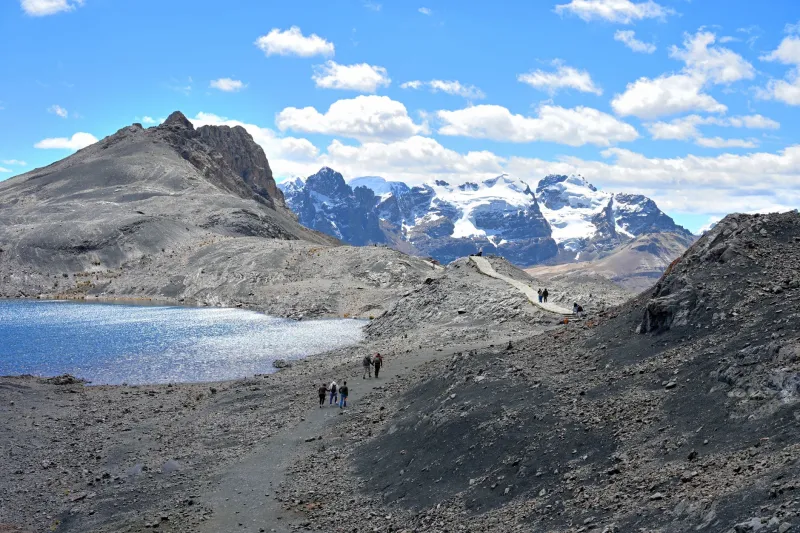
I met Victor on the second morning of a nine-day loop in the Cordillera Blanca, somewhere above the switchbacks out of Cashapampa, when the mules came past me and he stopped to let them breathe. I was carrying a daypack and still losing. He was carrying a rope, a machete, a bag of coca, and the responsibility for six animals and everything on them.
We walked together for an hour. By the end of it I had a number in my head that I could not stop turning over, and a list of questions I should have asked three months earlier, when I booked.
The Number That Never Makes the Booking Page
Trekking websites are very good at inclusions. Guide, cook, tents, dining tent, park permits, mule support, all-inclusive. What they almost never publish is what the arriero is paid per day.
So I asked. Not as an accusation, just as a guy on the same trail with the same curiosity. The answers held a consistent shape and a wide range: roughly 50 to 90 soles a day in this part of Peru, sometimes with meals included, sometimes not, and mule rental frequently a separate line item paid to whoever owns the animals, which is not always the person walking behind them.
At current exchange rates that is somewhere around $13 to $24 a day for a job that starts before dawn at 4,000 meters and ends after the last animal is picketed for the night.
What the Day Actually Looks Like
Victor was up at 4:30. Catch six animals in the dark, check hooves and backs, saddle and load, retie everything twice, then walk. Mules can reasonably carry something in the neighborhood of 60 to 80 kilos depending on the animal, the terrain, and the outfitter's conscience. Horses carry less. Nobody carries the arriero, who covers the same ground you do, often more of it, since animals get moved ahead and brought back.
At camp he is the last to eat and the first to check whether the grey mule has rubbed her shoulder raw under the pad. If it rains, he is not in the dining tent.
Where Your Trek Fee Goes
A nine-day guided trek sold in the US might run $1,800 to $3,000 per person. That money goes to park permits, transport from Huaraz, food for the whole crew, the cook, the guide, tents and gear, insurance, the agency's margin, mule rental, and wages.
The arriero's wage is often the smallest line in that budget and the least visible on the website. That is not automatically exploitation. Margins in Huaraz are thin and the season is short. But when a company cannot tell you the number, it usually means nobody has ever asked them, which is a different problem.
Fair Pay Is Mostly Boring
Fair treatment does not look dramatic. It looks like paperwork and logistics:
- A stated daily rate, in writing, before you book.
- Pay for the days the crew travels to and from the trailhead, not just the days you walk.
- Pay for rest days and weather days. A landslide that costs you a day costs them a day too.
- Boots, rain shell, and a sleeping bag rated for the altitude, provided by the outfitter, not "bring your own if you have one."
- Transport home at the end, not a handshake at the trailhead.
- A stated plan for injury, evacuation, and animal injury.
- Weight caps that are actually weighed, pads that are actually checked, and rest days for animals on long routes.
- The same food and shelter standard for the arriero that the guide gets.
The outfitters who are getting this right tend to answer these questions fast and specifically. They can name their arrieros. They have worked with the same families for years. They will tell you the daily rate without flinching, and they will tell you when it went up.
Nine Questions to Ask Before the Deposit
- What is the arriero's daily wage, and is it separate from the mule rental?
- How many days is he paid for, including travel days?
- Who owns the animals, and what does the owner receive?
- What is the maximum load per animal, and how is it weighed?
- What happens if an animal is injured, or a crew member gets hurt?
- Does the crew eat and sleep to the same standard as the clients?
- Are boots and rain gear provided?
- How long has the company worked with this particular family?
- Can I meet the arriero before we walk, and is tipping guidance given?
Red flags are equally boring: "mules are included" with no wage line, prices that do not change when you add days, animals with open saddle sores, an arriero under a plastic tarp while you are in a tent with a vestibule.
A Tip Is Not a Wage
Tipping is a kindness, not a structure. Sixty dollars at the end of a nine-day trek feels generous until you divide it by nine, and it does nothing for the arriero on the next trip or the one after that. The wage is the thing that repeats.
I still tip, and I tip better than I used to. But I no longer treat it as the fix. The fix is the number on the contract, and the number exists whether or not anyone asks about it.
The mountains do not care who carries the load. The people who do should be paid like it — and the least we can do, as travelers with a credit card and a booking confirmation, is ask what that number is before we start walking.