The Outlet Is a Favor: Keeping Devices Alive on Andean High Trails
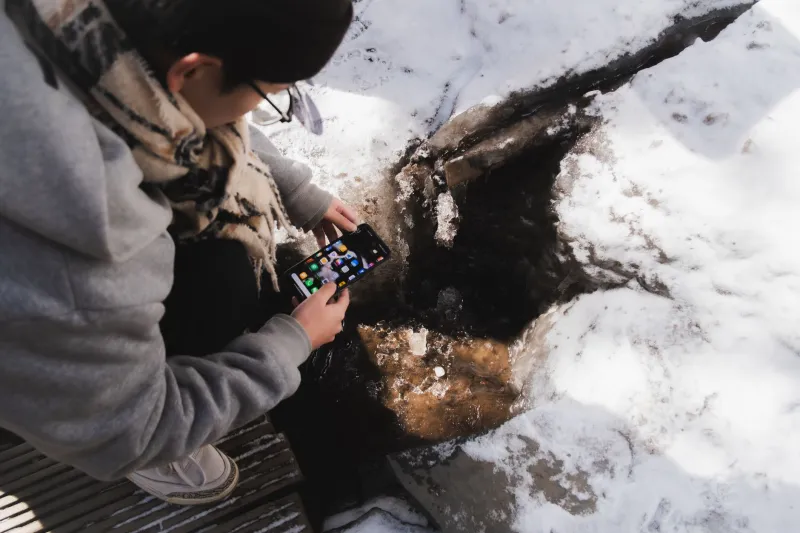
At 4,000 meters, your phone will not care that it was fully charged in Cusco. The cold will find it. The altitude will make your screen dim faster than you expect. And the outlet in the village may be one strip plugged into one wall, shared by a family and a guesthouse and whoever else is staying the night. Power in the high Andes is not a gear problem. It is a preparation problem, and a manners problem.
This is not a love letter to the latest power bank. It is a field guide to staying powered without turning a quiet mountain stay into a demand for someone else’s electricity.
Cold Takes the First Twenty Percent
Lithium-ion batteries do not like cold. A phone that reads 80 percent in a warm room can drop to 50 percent after an hour in a jacket pocket above 4,000 meters. This is not battery failure. It is chemistry. The same thing happens to a phone at a cold-weather NFL game in January, only here there is no heated concourse to retreat to.
The fix is mostly behavioral. Keep your phone and camera batteries in an inner pocket, not an outer shell. At night, put them in your sleeping bag, near your feet or under your pillow. Do not leave a camera on a tripod after sunset and expect the battery to be cheerful in the morning. If a device acts dead, warm it up before you panic-charge it. A cold battery can also refuse to charge properly, so let it reach room temperature first.
Do the Milliamp Math Before You Leave
Most people pack one power bank and hope. A better approach is to count what you actually carry. A phone might have a 4,000–5,000 mAh battery. A mirrorless camera can eat two or three batteries in a week of cold mornings. A headlamp is small but easy to forget. Add your days off-grid, not your days in town.
A 10,000 mAh power bank is a good daypack companion. A 20,000 mAh bank is more useful for multi-day stretches, but remember that advertised capacity is not usable capacity. Efficiency losses, cold, and cable quality all take a bite. Two smaller banks can be smarter than one big one: if one fails, you still have a backup, and you can split the load between your daypack and your duffel.
Bring short, known-good USB-C cables and a spare. Cheap cables fail quietly. If your camera uses a proprietary charger, bring the whole thing. And remember that power banks must go in your carry-on, not checked luggage, under TSA and airline rules.
Solar Helps, but It Won’t Save You
The high-altitude sun is strong. The days are not always long, the panels are not always angled well, and your need for power peaks after dark. A small 10–20 watt folding panel can be a useful supplement on a trek, especially if you charge during lunch and keep the panel clean and aimed. It is not a plan for a week off-grid. Treat solar as a top-off, not a primary source.
Charging in a Village Is a Social Transaction
This is the part most guides skip. In many Andean villages, electricity is not a given. A guesthouse may have one outlet, a single fluorescent bulb, and a family that is already careful about usage. Asking to charge your devices is reasonable. Assuming you have the right to do it is not.
Ask first, even if the outlet is empty. Do not unplug anything, including a phone that is not yours. Use your own adapter and cable. If possible, charge during daylight and unplug when you are done. Do not leave a device charging unattended for hours while you are out walking. If the family offers you a spot, keep it brief and say thank you. Offering to pay is fine; accepting a polite no is better. Buying a meal or a few supplies in the village is another quiet way to return the favor.
A guesthouse outlet is often a shared resource, not a personal charging station. Act accordingly.
Offline Maps and the Signal Drain
A phone searching for signal is a phone burning battery. Download your maps before you leave the last reliable Wi-Fi. Organic Maps, Gaia GPS, and other offline tools work well if you prepare the area in advance. Put the phone in airplane mode and use GPS-only tracking. Turn off background refresh, dim the screen, and resist the urge to stream anything.
Carry a paper map and a compass as backup. They do not need charging, and they do not care about the cold.
A Realistic Packing List
- One 10,000–20,000 mAh power bank, or two smaller banks
- Two short USB-C cables, plus any camera-specific charger
- A plug adapter for the country you are visiting; outlets vary across Peru, Bolivia, Chile, and Ecuador
- A small folding solar panel if you are spending long days away from towns
- A headlamp with spare batteries or a reliable rechargeable battery
- Spare camera batteries, kept warm
- A small dry bag for electronics
- Offline maps downloaded and tested before departure
- A short charging cable for your daypack, so you are not digging through your duffel at night
The Last Word: Prepare to Be Unplugged
The goal is not to stay at 100 percent. The goal is to stop thinking about percent at all. Charge what you can in town, carry enough to be self-sufficient for two or three days, and treat every village outlet as a kindness rather than a service. If your phone dies, the mountain will still be there in the morning. That is usually the point of going.