When the Trail Belongs to You: Five Andean Walks for the Quiet Weeks
By mid-November 2026, the big-name routes are sliding into their quieter weeks. The Inca Trail is still permit-bound and busy in its own way, but the independent trails that thread through Andean villages are thinning out. Shoulder season is not a discount code. It is a trade: fewer people for more weather homework. If you pack for the trade, you get something rare on famous ground, which is the feeling that the trail belongs to you.
1. Choquequirao, Peru
Choquequirao is the big ruin that most people skip because there is no train. The walk from Cachora takes four to five days round trip, and it is a proper climb in and out of a hot canyon. Late October and November usually bring dry-ish mornings, afternoon clouds, and fewer muleteers on the switchbacks. April and May are often more stable, with hard sun and cold nights. Transport is straightforward: bus or colectivo from Cusco to Cachora, then arrange the return from Huanipaca or back through Cachora. Cachora has guesthouses, and Marampata has basic beds, but do not expect a full menu of services. What changes in shoulder season is the silence. You may share the ruins with a handful of walkers instead of a line of them. The flip side is that mule support is thinner, so carry cash and be honest with yourself about your fitness.
2. Huchuy Qosqo via Patabamba, Peru
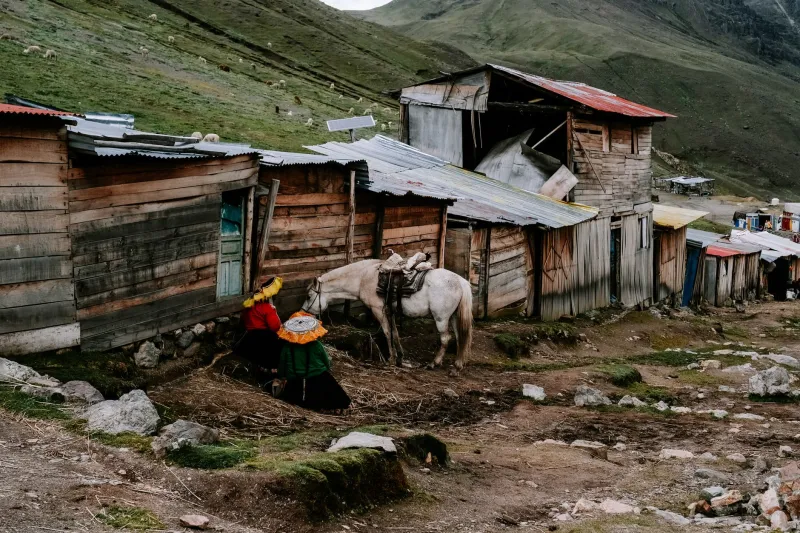
This two-day route over a high pass from Patabamba to Lamay is not a secret, but it is still quiet. You start with a colectivo from Cusco to Patabamba, sleep in a community lodge, and cross a pass around 4,100 meters before dropping into the Sacred Valley. Late October and November are greener and muddier; April and May bring clearer mornings and colder nights. The village stay is the point. You are not in a hotel with a lobby; you are in a community that has decided to host walkers on its own terms. Arrange the lodge before you arrive, bring small bills, and do not treat the kitchen as a restaurant. What changes in shoulder season is that you may be the only group on the trail, which makes the pass feel higher and the village quieter.
3. Takesi Trail, Bolivia
The Takesi is a pre-Columbian stone road that drops from the altiplano near La Paz into the Yungas. It usually takes two to three days, starting high and ending in cloud forest. Transport begins with a bus from La Paz toward Ventilla, then local arrangements to the trailhead. April and May are generally drier and colder; late October and November can be wet in the forest, with slick stone and fast streams. Village stays in Takesi and lower down are basic, and you should not count on mule support showing up without arranging it. What changes in shoulder season is the trail itself: fewer hikers, more overgrowth, and river crossings that demand attention. Navigation matters here. Do not rely on a phone screen alone.
4. El Choro, Bolivia
El Choro is another La Paz classic, a three-day descent from La Cumbre to Coroico. It is not a wilderness route so much as a string of villages and old paths that feel forgotten in the best way. April and May are the cleaner windows; November is often muddy and humid as the rains return. Transport is easy at the start, with a bus or taxi to La Cumbre, and easy at the end, with a bus from Coroico back to La Paz. Village beds are simple. The shoulder-season reward is quiet, but the trade is mud. Bring poles, gaiters if you like them, and a sense of humor about slipping. What changes when the crowds are gone is that the villages feel less like service stops and more like places where people happen to live.
5. Quilotoa Loop, Ecuador
The Quilotoa Loop is a three-to-four-day walk between Quilotoa, Chugchilán, and Isinlivi, with buses from Latacunga at either end. It is not remote wilderness. It is a necklace of villages and hostels, which makes it a good shoulder-season choice if you want independence without total isolation. October and November can bring fog and rain; April and May are often showery but softer. Mornings are usually clearer than afternoons. Book your first night, carry cash, and ask locally about trail conditions before you commit to the day's route. What changes in shoulder season is the pace. The trail is quieter, the hostels are less crowded, and the fog makes the crater rim feel like a secret even when it is not.
The Shoulder-Season Rules
Start early. Carry cash. Ask about water and bridges. Build in a weather day. Do not treat villages as services. If a trail is muddy, turn around if it is beyond your comfort level. The point of these weeks is not to bag a route in bad conditions. It is to walk when the mountains are open and the crowds are not. In 2026, that window is still worth planning around.